Fertilizers
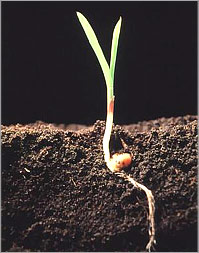
We have always maintained a dynamic presence in the realm of fertilizer industry, to expand a world-wide presence and to continue providing its customers with high quality reliable products. It is known for its quality biochemical pesticides, fertilizers and bio-pesticides.
To maintain and improve the high quality of its products, Fertilizers and Pesticides implements a stringent quality management program, comprise a combination of sophisticated laboratory analysis and the latest computer technology, to make the on line measurements through the production process, from the incoming of raw material to the distribution of the final products.
An important item of our exports is fertilizers, both chemical and organic based.
More About fertilizer
Fertilizer, any of a large number of natural or synthetic materials, including manure and compounds containing nitrogen (N), phosphorus (P205) and potassium (K20) spread on or worked into soil to provide 3 of the 17 elements essential for plant growth.
Other less commonly required elements for soil are sulphur, calcium, magnesium, iron, copper, manganese, boron and zinc.
Fertilizers can be either inorganic (made of simple, inorganic chemicals or minerals) or organic (composed of organic matter).
Manufactured or commercial fertilizers are basically sold on the basis of the N, P205 and K20 content (expressed as percentages) and usually contain a high proportion of one or more of these elements. We can take the example of urea, a commonly used fertilizer, has the analysis 46-0-0, indicating that it contains 46% N but no P2O5 or K20. The 11-55-0 analysis of a commonly used ammonium-phosphate fertilizer indicates that it contains 11% N and 55% P2O5 but no K20.
In fact, natural organic fertilizers (eg, barnyard manure, sewage sludge) are much lower in nutrient content and higher in bulk than are manufactured fertilizers. Manure, although variable in composition, commonly contains about 0.5% N, 0.25% P205, 0.5% K20 and small amounts of other essential elements as well. It is an important fertilizer specially for livestock farms and may also be used on land close to large livestock-feeding enterprises. As they have low nutrient content and high bulk, it is impractical to transport natural organic fertilizers long distances.
The use of manufactured commercial fertilizers is unavoidable in the agricultural systems of urbanized societies. Not surprisingly, where fertilizers are available at prices that farmers can afford, crop yields are much higher than in countries where very little fertilizer is used. Organic fertilizers are also play an essential part in agriculture in general and in rural societies in particular.
 | Articles