Organic Fertilizers
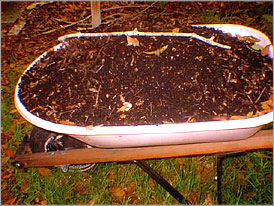
The
organic class of fertilizers (again, in very basic terms) tends to be less refined and involve little or no chemical processing. Also, the natural environment tends to have an easier time of breaking down and absorbing them. However, a few types can and do pollute ground water and other water systems. Animal manure (cow, chicken) can cause many problems if used improperly.
Manure is a highly concentrated source of nitrogen, which is easily released when exposed to rain or other forms of irrigation. Excess nitrogen and phosphorous have proven to be major problems when released into our waterways and other water sources.
One benefit of using an organic "fert" is an increase in the biological activities in the soil. Micro-organism's within the soil help plants convert nutrients into food and help to break down old plant material which adds to the over all health of the soil and garden. Chemical products in general do not offer this benefit which is one of the complaints from the proponents of organic style gardening.
With the rise in popularity of organic style gardening there is a risk of misusing this class of fertilizer as well. To say that an organic product is completely safe and leave it at that is to not really understand the question of fertilizers in general.
Vermi compost
Vermicompost (also known as worm compost, vermicast, worm castings worm humus or worm manure) is the end-product of the breakdown of organic matter by some species of earthworm. It is a nutrient-rich, natural fertilizer and soil conditioner. In fact, vermin compost has been emerging as an important source in supplementing/substituting chemical fertilizers in agriculture. It has also been reported to enhance plants ability to fight against insect pests and diseases. It also improves soil structure due to presence of soil binding chemicals. It improves physical properties of the soil like soil air, soil temperature, soil water retention and soil mechanical impedance. Due to non-presence of toxic enzymes it is also eco-friendly and it also has beneficial effect on the bio chemical activities of the soil.
Press mud compost
Press Mud is a by-product of sugar industry. For every tone of Sugar Cane approximately 30 to 40 kg Press Mud is produced. Press Mud is used as manure in the sugarcane fields. Press mud contains trace quantity of micro nutrients and prevents soil erosion, crusting and cracking, adjust soil pH, improves drainage and promotes normal bacterial and microbial growth in the soil. It is used as both soil reclamant as well as soil conditioner. Press mud is the most economic soil reclamant for red loamy soil. It should be broadcasted followed by ploughing and irrigation.
Bone meal
Bone meal is used as a high phosphorus fertilizer. It has a tiny amount of Nitrogen ('N') as well as Calcium ('Ca') and a speck of Potassium ('K'). It supports strong flowers and roots. Most of the bones used in bone meal come from packing and slaughter houses. Root crops benefit from phophorus which is supplied in abundance by this fertilizer. You can mix Bone Meal into the soil of any shrub, flowering or not. It is important to mix it into the soil because the nutrients cannot travel far to the roots; mixing it in will make that journey shorter and disperse the Bone Meal better.
 | Articles