We are a conducing and applauded manufacturer and supplier of different biocontrol agents. Bio farming system plays a vital role in horticultural and planting cash crops. We have incorporated latest technology prevailed from Indian Institute of Research and Development. Our bio-control agents are manufactured and marketed under various trademarks and standards. All of them are very helpful in bio farming and cultivation. We also create awareness among farming communities by providing important information about organic cultivation.
We lend highly efficient and environment friendly bio-control agents suitable for established and organic growers. The formulations of them are designed to suit the climatic requirements of commercial green house growers. To maintain environmental harmony we are staunch supporters of safeguarding it. We are well known entity in the industry with the support of a huge client base which consists of high profile clients. We offer our customers :
Microbial bio-control agents in liquid as well as powder formulation depending on the end application
Concentrated microbial Bio-control agents for longer ledge life
Products as per the required specifications and flexible packing to suit your convenience
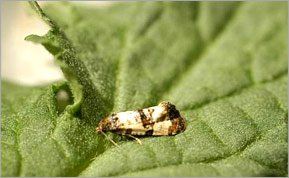
For preserving and maintaining biological control, bio-control agents are used. Bio-control agents are most often insects which are adaptable to the environment as they are newly released utilizing the weed for food, home and reproduction. They might consume leaves, flower parts or immature seeds. Bio control agents do not completely extirpate populations of their host plants although they reduce the weed density to an acceptable level or to reproductive potential of individual plants.
We manufacture different bio-control agents that are microorganism. Different biocontrol agents produced by our company are :
Triaccosal:
It is one of the microorganism which is based on Trichoderma viride.
Fluroissal:
It is a bio-control agent which is microorganism based on Pseudomonas Fluorescens.
Beauveria Bassiana:
It is a fungus which belongs to the entomopathogenic fungi that grows naturally in soils throughout the world, acts as a parasite on various insect species and used as a biological insecticide to control a number of pests such as termites, whitefly, different beetles.
Verticillium lecanii:
It is a genus of fungi belonging to Ascomycota, comprising saprotrophs and parasites of higher plants, insects, nematodes, mollusc eggs and other fungi.
Metarrhizium anisopliae:
It is a entomopathogenic fungus with a wide range of host species. Metarrhizium anisopliae is a common pathogen of insects and used to control insect populations.
Gliocladium virens:
It is a mitosporic filamentous fungus considered as a contaminant widely distributed in soil and decaying vegetation.
Pythium oligandrum:
It is an Oomycete which is a parasite of many fungi including Botrytis, Fusarium and Phytophthora. Pythium oligandrum is a biocontrol agent in the form of an oospore soil treatment, whichreduces pathogen load and concomitant plant disease.
Talaromyces flavus:
It is an ascomycete fungus found in the soil or on rotting organic substrates such as fruits. Talaromyces flavus is used to control Verticillium wilt of eggplant which is caused by Verticillium dahliae.
Arbuscular mycorrhizal:
It is a symbiotic association between a fungus and the roots of a plant. In Arbuscular mycorrhizal association the fungus colonize the roots of a host plant either intracellularly or extracellularly.
Bacillus subtilis:
It is a gram-positive, catalase-positive bacterium commonly found in soil. Bacillus subtilis has the ability to form a tough, protective endospore, allowing the organism to tolerate extreme environmental conditions.
Enterobacter cloacae:
It is a genus of common gram-negative, facultatively-anaerobic, rod-shaped bacteria of the family Enterobacteriaceae. Several strains of the bacteria are pathogenic and cause infections in hospitalized hosts.
Serratia entomophila:
It is a microbial control agent and has a virus like structure. A granular formulation of Serratia entomophila has been developed to improve shelf-life and storage characteristics of this bacterium, which causes amber disease in the grass grub.
Bacillus thuringiensis var. Kurstaki:
It is a gram-positive, soil dwelling bacterium of the genus Bacillus. Bacillus thuringiensis occurs naturally in the gut of caterpillars of various types of moths and butterflies as well as on
the dark surface of plants.
Nuclear polyhedrosis virus (NPV):
It belongs to the sub group Baculoviruses which is a virus affecting insects, moths and butterflies.
 | Articles